The Ultimate Creeping Blue Grass Care & Maintenance Guide (2026)
Introduction and Overview
A lush, vibrant lawn is the crown jewel of any home, and Creeping Blue Grass is a top choice for achieving that classic green carpet. Scientifically known as Poa pratensis (often used interchangeably with Kentucky Bluegrass due to its identical species classification and creeping habit), this cool-season turfgrass is native to Europe and Asia but has been naturalized across the United States for centuries. It gets its common name from its unique underground stems, called rhizomes, which allow it to creep and spread laterally to fill in bare spots. Homeowners and professional turf managers choose Creeping Blue Grass for its exceptional cold hardiness, beautiful blue-green color, and remarkable ability to recover from physical damage. Unlike bunch-type grasses that grow strictly upward, this species spreads outward, creating a dense, uniform sod. Typical use cases include residential lawns, high-traffic sports fields, public parks, and ornamental landscapes where a pristine, carpet-like appearance is desired. While it requires a bit more attention than some low-maintenance alternatives, the payoff is a stunning, resilient lawn that boosts your property’s curb appeal.
Quick Facts
| Attribute | Detail |
|---|---|
| Scientific Name | Poa pratensis |
| Climate Type | Cool-season |
| USDA Hardiness Zones | 3-8 |
| Sunlight Needs | Full sun to partial shade (4-6 hours minimum) |
| Traffic Tolerance | High |
| Growth Habit | Rhizome |
| Maintenance Level | Medium to High |
| Estimated Annual Cost per 1,000 sq ft | $150 – $300 |
How to Identify Creeping Blue Grass
Identifying this grass in your yard requires looking at a few specific visual and tactile characteristics. The leaf color is a distinct, rich blue-green, which sets it apart from the brighter greens of ryegrass or fescue. The individual grass blades are quite narrow, typically measuring 2 to 4 millimeters in width, giving the lawn a fine-textured appearance. One of the most reliable identification features is the boat-shaped leaf tip, which feels slightly pointed but rounded when pinched. The ligule (the membrane where the leaf meets the stem) is short, membranous, and often torn at the top. It notably lacks auricles (the claw-like appendages at the base of the leaf). Its growth habit is distinctly spreading via underground rhizomes rather than above-ground stolons. Finally, if left unmowed, it produces a beautiful, open, pyramid-shaped seedhead known as a panicle.
Pros and Cons of Creeping Blue Grass
Advantages
- Exceptional Recovery: The rhizomatous growth habit allows it to quickly repair damage from foot traffic or pests.
- Cold Hardiness: It survives harsh, freezing winters better than almost any other cool-season grass.
- Aesthetic Appeal: It provides a classic, dense, and uniform blue-green color that looks highly professional.
- Self-Spreading: It naturally fills in thin areas and bare patches without needing constant reseeding.
Drawbacks
- Shallow Root System: The roots are relatively shallow, making it highly susceptible to drought stress during peak summer heat.
- High Maintenance: It requires frequent mowing, regular fertilization, and consistent watering to look its best.
- Slow Establishment: When grown from seed, it has one of the slowest germination and establishment rates among cool-season grasses.
- Disease Susceptibility: It is prone to several fungal diseases, especially in hot, humid summer conditions.
Mowing and Trimming Guidelines
Ideal Mowing Height
For a healthy Creeping Blue Grass lawn, you should maintain a mowing height between 2.5 and 3.5 inches. During the cooler months of spring and fall, you can keep it closer to 2.5 inches. However, during the heat of summer, raise your mower deck to 3.5 inches to shade the soil and protect the shallow roots. Always follow the 1/3 rule: never cut more than one-third of the grass blade in a single mowing session to prevent shocking the plant.
Mowing Frequency
During the peak growing seasons of spring and fall, Creeping Blue Grass grows rapidly and may require mowing every 3 to 4 days. During the dormant or slow-growth periods of mid-summer and winter, growth slows significantly, and mowing once every 10 to 14 days is usually sufficient. Adjust your schedule based on actual growth rather than a rigid calendar.
Best Mower Type
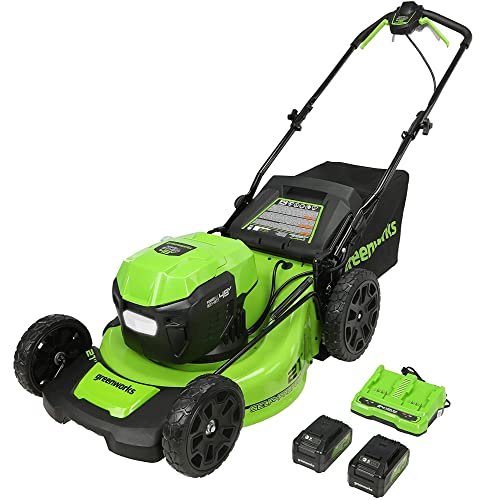
A high-quality rotary mower is the best choice for most homeowners. While reel mowers provide a pristine, golf-course cut, they require very frequent blade sharpening and struggle with the taller 3.5-inch summer heights recommended for this grass. A rotary mower handles the varying heights, occasional thatch, and uneven terrain much more efficiently while delivering a clean, healthy cut.
Trimmer and Edger Recommendations
When using a string trimmer to edge your lawn, use a 0.080 to 0.095-inch diameter string line. Using a string that is too thick (like 0.105-inch) acts like a whip and will easily scalp and tear the delicate, fine blades of Creeping Blue Grass. A thinner line provides a cleaner cut without damaging the crown of the grass, ensuring a smooth transition between your lawn and garden beds.
Watering Schedule and Moisture Management
Establishment vs Established Watering
Newly seeded or sodded Creeping Blue Grass requires light, frequent watering to keep the top inch of soil constantly moist. This usually means watering 2 to 3 times a day for 5 to 10 minutes. Once the grass is established (roots are 3-4 inches deep), transition to deep, infrequent watering to encourage deep root growth and improve drought tolerance.
Frequency and Duration
An established lawn needs 1 to 1.5 inches of water per week, including rainfall. If you are using standard pop-up sprinkler heads that output about 0.5 inches of water per hour, you should run your system for 20 to 30 minutes per zone, twice a week. If you use rotating nozzles that output 0.25 inches per hour, you will need to run them for 40 to 60 minutes per cycle to reach the weekly goal.
Best Time of Day
Always water in the early morning, ideally between 4:00 AM and 8:00 AM. Watering at this time allows the moisture to soak deeply into the soil before the sun evaporates it. It also ensures the grass blades dry quickly as the sun rises, which is critical for preventing fungal diseases.
Drought Response and Signs of Underwatering
Because of its shallow roots, Creeping Blue Grass will show stress quickly if underwatered. Watch for these visual cues:
- Footprinting: Grass blades do not spring back after you walk on them.
- Bluish-Gray Tint: The vibrant blue-green color fades to a dull, ashy gray-blue.
- Wilting: Leaves fold inward or appear curled along the midrib.
- Dry Soil: The top 2 inches of soil feel completely dry and crumbly to the touch.
Fertilization and Soil Health
Soil pH Range
Creeping Blue Grass thrives in a slightly acidic to neutral soil pH range of 6.0 to 7.0. If your soil pH drops below 6.0, the grass struggles to absorb essential nutrients. You can raise the pH by applying pelletized lime, while elemental sulfur can be used to lower the pH if your soil is too alkaline.
Recommended NPK Ratios and Product Types
Look for fertilizers with an NPK ratio of 3-1-2 or 4-1-2 (such as 24-8-16 or 32-8-16). Use slow-release granular fertilizers for the bulk of your feeding, as they provide a steady supply of nitrogen over 6 to 8 weeks without causing rapid, weak growth. For a quick color boost without excessive top growth, apply liquid iron (chelated iron) during the summer months. Organic options like milorganite are great for building long-term soil health, while synthetic options provide precise, immediate nutrient delivery.
Annual Fertilizing Schedule
Feed your lawn during its active cool-season growth periods. Apply fertilizer in early spring (April) when soil temps hit 50°F, late spring (May), early fall (September), and late fall (November). Avoid fertilizing during the peak heat of July and August, as this can fuel fungal diseases and stress the grass.
Aeration and Dethatching
Creeping Blue Grass can build up a moderate layer of thatch over time due to its aggressive rhizomes. If the thatch layer exceeds 0.5 inches, it blocks water and nutrients. Core aerate your lawn annually in the early fall using a plug aerator to relieve soil compaction. If thatch is severe, use a power rake or dethatching blade in early September to physically remove the dead organic layer before overseeding.
Weed Control for Creeping Blue Grass
Common Weeds
The top 5 weeds that commonly invade Creeping Blue Grass lawns are:
- Crabgrass: A summer annual that thrives in thin, sunny areas.
- Dandelion: A broadleaf perennial with a deep taproot.
- White Clover: A low-growing broadleaf weed that fixes its own nitrogen.
- Chickweed: A winter annual that forms dense, mat-like patches.
- Broadleaf Plantain: A tough perennial with wide, ribbed leaves that tolerates compaction.
Pre-Emergent Herbicides
Apply pre-emergent herbicides when the soil temperature reaches 50°F to 55°F (usually early to mid-spring). Effective active ingredients include Prodiamine, Dithiopyr, and Pendimethalin. These create a chemical barrier in the top layer of soil that stops weed seeds like crabgrass from germinating. Do not use pre-emergents if you plan to overseed in the spring, as they will also stop your grass seed from sprouting.
Post-Emergent Herbicides Safe for Creeping Blue Grass
For existing broadleaf weeds, use selective post-emergent herbicides containing 2,4-D, Dicamba, and MCPP. These ingredients target broadleaf weeds while leaving your grass unharmed. Warning: Never use non-selective herbicides like Glyphosate on your lawn, as it will kill the Creeping Blue Grass. Additionally, avoid applying broadleaf weed killers during summer temperatures above 85°F, as the stress can damage your turf.
Common Pests and Diseases
Top Pests
- White Grubs: The larval stage of beetles that eat grassroots. Signs: Spongy turf that rolls back like carpet. Treatment: Apply beneficial nematodes or Imidacloprid in early summer.
- Bluegrass Billbugs: Weevils whose larvae hollow out grass stems. Signs: Stems break off easily at the base; sawdust-like frass. Treatment: Apply preventative insecticides in late spring.
- Sod Webworms: Caterpillars that chew grass blades at the crown. Signs: Irregular brown patches; visible silken webbing in the thatch. Treatment: Use Bacillus thuringiensis (Bt) or synthetic pyrethroids.
- Chinch Bugs: Tiny insects that suck plant juices and inject toxins. Signs: Yellowing patches that turn brown, often near sunny driveways. Treatment: Apply bifenthrin or use diatomaceous earth for organic control.
Top Diseases
- Dollar Spot: Forms silver-dollar-sized, sunken, straw-colored patches. Fungicide: Apply Azoxystrobin or Propiconazole. Cultural fix: Maintain adequate nitrogen and water deeply.
- Brown Patch: Large, irregular, water-soaked rings of brown grass. Fungicide: Use Pyraclostrobin or Fluoxastrobin. Cultural fix: Improve air circulation and avoid evening watering.
- Pythium Blight: Cottony, greasy-looking patches that mat down, often in low, wet areas. Fungicide: Apply Propamocarb or Fosetyl-al. Cultural fix: Improve drainage and reduce surface moisture.
- Leaf Spot and Melting Out: Purple-brown spots on leaves that eventually kill the crown. Fungicide: Use Chlorothalonil or Mancozeb. Cultural fix: Avoid excessive spring nitrogen and mow at the proper height.
Seeding, Overseeding, and Renovation
Best Time to Seed
The absolute best time to seed or overseed Creeping Blue Grass is in late summer to early fall. The ideal soil temperature range is 50°F to 65°F (air temperatures around 70°F to 80°F). This allows the grass to establish strong roots during the cool fall months before facing the stress of the first summer.
Seeding Rates
For a brand-new lawn, apply 2 to 3 pounds of seed per 1,000 square feet. If you are overseeding an existing lawn to thicken it up, reduce the rate to 1 to 2 pounds per 1,000 square feet. Using too much seed causes overcrowding, which leads to weak, disease-prone seedlings.
Overseeding Process
- Mow Low: Cut the existing grass down to about 1.5 to 2 inches and bag the clippings.
- Aerate: Run a core aerator over the lawn to open up the soil and reduce thatch.
- Spread Seed: Use a broadcast spreader to apply the seed evenly at the recommended rate.
- Top Dress (Optional): Spread a thin layer (1/4 inch) of compost or peat moss over the seed to retain moisture.
- Water: Water lightly immediately after seeding, and keep the top inch of soil moist daily until germination.
Germination Time
Creeping Blue Grass is notoriously slow to sprout. Under ideal moisture and temperature conditions, expect a germination time of 14 to 21 days. Be patient and keep the soil consistently moist during this entire window.
Maintenance Cost Breakdown for Creeping Blue Grass
Initial Establishment Costs (First Year)
Starting a new Creeping Blue Grass lawn requires an upfront investment. Seed costs $4 to $8 per pound (totaling $20 to $40 for a 1,000 sq ft area). Sod is much faster, ranging from $0.50 to $0.80 per square foot installed. Plugs cost about $30 to $50 per tray, requiring 4 to 6 trays per 1,000 sq ft. A professional soil test kit or service runs $15 to $25. Lime or sulfur amendments cost $15 to $30 per bag. Starter fertilizer is $20 to $30. Tilling and grading costs $100 to $200 for DIY equipment rental, or $300 to $500 for professional service. A basic equipment starter kit (push mower $200-$400, self-propelled $400-$800, string trimmer $80-$150, broadcast spreader $40-$80, and oscillating sprinkler $30-$60) will set you back $350 to $1,090.
Annual Recurring Costs
| Expense | DIY Cost / year | Professional / year | Notes |
|---|---|---|---|
| Fertilizer | $60 – $100 | Included in programs | 4 applications of slow-release granular. |
| Pre-emergent Herbicide | $20 – $35 | Included in programs | Spring application for crabgrass control. |
| Post-emergent Herbicide | $15 – $25 | Included in programs | Spot treatments for broadleaf weeds. |
| Insecticides | $20 – $40 | $50 – $80 | Grub control or billbug preventative. |
| Fungicides | $30 – $60 | $80 – $150 | Preventative or curative for dollar spot. |
| Water | $150 – $250 | N/A | Varies heavily by municipal rates and rainfall. |
| Overseeding | $20 – $40 | $150 – $250 | Seed and light topdressing per 1,000 sq ft. |
| Aeration and Dethatching | $75 – $100 (rental) | $120 – $200 | Core aeration in the fall. |
| Mower Maintenance | $40 – $80 | N/A | Blade sharpening, oil changes, air filters. |
| Totals | $430 – $730 | $450 – $680 | Excludes initial equipment and water for pros. |
Water Cost Estimate
An established Creeping Blue Grass lawn requires about 625 gallons of water per 1,000 square feet to apply one inch of water. At a baseline municipal rate of $6 per 1,000 gallons (typical US rate in 2026), this costs roughly $3.75 per week during the growing season. Over a 20-week active watering season, expect to spend $75 to $100 on water. Because this grass goes dormant in severe drought, you can save up to 20% on annual water costs by allowing it to naturally brown out during extreme heat waves rather than forcing it to stay green.
Equipment Costs and Lifespan
- Mower: A reliable rotary mower costs $300 to $700 and has an expected lifespan of 8 to 10 years with proper maintenance.
- Trimmer/Edger: A quality gas or battery-powered string trimmer costs $100 to $200 and lasts 5 to 7 years.
- Spreader: A durable broadcast spreader costs $50 to $100 and can last 10+ years if cleaned after each use.
- Aerator: Renting a core aerator costs $75 to $100 per day. Purchasing a tow-behind or walk-behind aerator costs $800 to $1,500+ and is only recommended for very large properties.
Professional Lawn Care Service Costs
If you prefer to hire out the work, expect to pay $40 to $60 per visit for mowing only, totaling $160 to $240 per month during the growing season. A comprehensive fertilization and weed control program costs $300 to $600 per year. A full-service lawn care package (including mowing, edging, blowing, and seasonal treatments) runs $150 to $300 per month, or $1,800 to $3,600 per year. Standalone aeration service costs $80 to $150 per visit, dethatching service is $100 to $200 per visit, and professional overseeding costs $150 to $250 per 1,000 square feet.
Money-Saving Tips
- Test your soil first: Avoid guessing with fertilizers; a $15 soil test prevents you from buying unnecessary amendments.
- Sharpen mower blades annually: Dull blades tear the grass, increasing water loss and disease susceptibility, which costs more to fix.
- Water deeply and infrequently: Training your grass to grow deep roots reduces your overall water bill by up to 30%.
- Leave grass clippings: Mulching clippings returns up to 25% of the lawn’s required nitrogen back to the soil for free.
- Buy fertilizer in bulk: Purchasing 40-pound bags of professional-grade fertilizer is significantly cheaper per pound than retail boxes.
- Rent equipment for aeration: Unless you have more than 5,000 square feet of turf, renting an aerator for a day is much cheaper than buying and storing one.
- Allow summer dormancy: Let the lawn go naturally dormant during August droughts instead of paying high municipal water rates to keep it artificially green.
- Spot-treat weeds: Use a spray bottle for isolated dandelions instead of broadcasting weed killer over the entire lawn.
Return on Investment
A well-maintained Creeping Blue Grass lawn can increase your property value by 5% to 10% by maximizing curb appeal for resale. The dense, uniform look signals to buyers that the home has been meticulously cared for. With proper cultural practices, a Creeping Blue Grass lawn has a longevity of 10 to 15 years before requiring a major, costly renovation or complete teardown.
Seasonal Care Calendar
Spring
- March/April (Soil temp 40°F-50°F): Rake the lawn to remove winter debris. Apply pre-emergent herbicide when soil hits 50°F.
- April/May (Soil temp 50°F-60°F): Apply the first round of slow-release fertilizer. Begin regular mowing at 2.5 inches.
- May/June: Transition to deep, infrequent watering. Spot-treat any early broadleaf weeds.
Summer
- June/July (Air temps >80°F): Raise mower deck to 3.5 inches. Monitor closely for dollar spot and brown patch; apply fungicides if necessary.
- July/August: Water early in the morning. Watch for grubs and billbugs. Allow the grass to go dormant if severe drought occurs.
- August: Avoid applying high-nitrogen fertilizers or broadleaf weed killers during peak heat.
Fall
- September (Soil temp drops to 70°F): Core aerate the lawn. Overseed bare patches at 1-2 lbs per 1,000 sq ft. Apply early fall fertilizer.
- October: Rake fallen leaves promptly to prevent smothering the grass. Apply post-emergent herbicide for winter weeds like chickweed.
- November (Soil temp drops to 50°F): Apply the final “winterizer” fertilizer high in potassium. Give the lawn one last deep watering before the ground freezes.
Winter
- December/January: Keep heavy foot traffic off the dormant lawn to prevent crown damage. Clean and sharpen mower blades.
- February: Plan your spring fertilizer and weed control budget. Check sprinkler heads for winter damage and repair as needed.
Creeping Blue Grass vs Similar Grasses
| Attribute | Creeping Blue Grass | Tall Fescue | Perennial Ryegrass |
|---|---|---|---|
| Shade Tolerance | Moderate (Needs 4-6 hrs sun) | High (Tolerates 2-4 hrs sun) | Low (Needs full sun) |
| Drought Tolerance | Low (Shallow roots) | High (Deep roots) | Low (Shallow roots) |
| Maintenance Level | Medium to High | Low to Medium | High |
| Establishment Cost | Medium ($0.50-$0.80/sq ft sod) | Medium ($0.40-$0.70/sq ft sod) | Low ($0.30-$0.60/sq ft sod) |
| Water Needs | 1 – 1.5 inches per week | 0.75 – 1 inch per week | 1 – 1.5 inches per week |
| Fertilizer Needs | 3 – 4 lbs Nitrogen / 1,000 sq ft | 2 – 3 lbs Nitrogen / 1,000 sq ft | 3 – 4 lbs Nitrogen / 1,000 sq ft |
| Best Use | Premium lawns, sports fields | Shady areas, low-maintenance lawns | Quick cover, overseeding, high wear |
Frequently Asked Questions
Does Creeping Blue Grass come back every year?
Yes, Creeping Blue Grass is a perennial cool-season grass, meaning it comes back every year. During the freezing winter months, it goes dormant and turns brown, but it will naturally green up again in early spring as soil temperatures rise. In extremely hot summer climates, it may also go partially dormant to survive the heat, returning to full vigor when fall temperatures cool down.
Why is my Creeping Blue Grass turning yellow or brown?
Yellowing or browning is usually caused by one of three issues: drought stress, fungal disease, or nutrient deficiency. Because it has shallow roots, it turns brown quickly if underwatered during summer heat. Fungal diseases like dollar spot or brown patch cause distinct brown patches. Finally, a lack of nitrogen or iron in the soil will cause the vibrant blue-green color to fade to a pale yellow.
Can Creeping Blue Grass grow in shade?
It has moderate shade tolerance and requires at least 4 to 6 hours of direct or dappled sunlight daily to thrive. In heavily shaded areas under dense tree canopies, it will become thin, weak, and highly susceptible to disease. If your yard receives less than 4 hours of sun, you should consider planting a shade-tolerant alternative like fine fescue or tall fescue instead.
How fast does Creeping Blue Grass spread?
It spreads laterally at a moderate pace through its underground rhizomes. During its peak active growth periods in spring and fall, it can spread about 1 to 2 inches per month. This creeping habit allows it to naturally recover from minor damage and fill in thin areas over a single growing season, though it is not as aggressively fast-spreading as bermudagrass.
Is Creeping Blue Grass pet and dog friendly?
Yes, it is highly pet and dog friendly. It has excellent traffic tolerance and a remarkable ability to recover from the physical wear and tear caused by running dogs. While no grass is entirely immune to dog urine spots, its dense, rhizomatous growth habit allows it to repair minor urine burns much faster than bunch-type grasses like ryegrass or fescue.
How much does it cost to maintain a Creeping Blue Grass lawn?
The annual maintenance cost for a DIY homeowner typically ranges from $150 to $300 per 1,000 square feet. This includes the cost of fertilizer, weed control, water, and occasional equipment rentals for aeration. If you hire a professional lawn care service for mowing, fertilization, and weed control, expect to pay between $1,800 and $3,600 per year for an average-sized lawn.
Is Creeping Blue Grass more expensive to maintain than other common grasses?
It is generally slightly more expensive to maintain than tall fescue or fine fescue, primarily because it requires more frequent watering and higher amounts of fertilizer to maintain its dense color. However, it is usually comparable in cost to perennial ryegrass. The higher upfront costs are often offset by its superior ability to self-repair, which reduces the need for constant reseeding and renovation.
Conclusion
Growing a beautiful Creeping Blue Grass lawn is highly rewarding, but it requires a commitment to consistent, proper care rather than intense, sporadic efforts. By following the seasonal calendar outlined above, keeping your mower blades sharp, and watering deeply but infrequently, you will build a deep-rooted, resilient turf that can withstand the changing seasons. Remember that consistency beats intensity; a steady routine of mowing, feeding, and monitoring will yield the best results over time. If you encounter persistent pest infestations or widespread fungal diseases that you cannot diagnose or control using this guide, reach out to a local lawn care professional or your county extension office for targeted, region-specific advice.